

Marty Supreme is taking cinema by storm. Having already won 44 awards and sure to receive more at this year’s Oscars, Marty Supreme is part of a new wave of films which are making sports sexy.
Classically, sports films are about just that, sports. They follow a familiar formula: a struggling athlete, an unorthodox coach, a training montage and a win for the underdog. Recently, though, something’s shifting. Now, sports films aren’t just about winning, they’re about wanting.
This trend was arguably kick-started by Challengers. On the surface, it’s a tennis film but underneath it’s about desire. The complicated relationship between Tashi (Zendaya), Patrick (Josh O’Connor) and Art (Mike Faist) is communicated through tennis. Throughout the film, it’s deliberately unclear whether they are talking about the game or sex.
In these movies, ‘sexiness’ doesn’t come from showing the act or the casts of beautiful people. It’s a feeling. In Challengers, tension and flirtation are created through the sport, with Tashi as the driving force. She uses sexuality to fuel the rivalry between the men and unveil their buried desire for one another. To make us feel this, Luca Guadagnino shoots matches like a sex scene using close-ups on the body, intense eye-contact and dripping sweat with a pulsing techno soundtrack. Meanwhile, the actual sex is glossed over.
Marty Supreme is more explicit, but Marty (Timothée Chalamet) thinks the same way as Tashi. Sex is fun, a way to get what he wants, but table tennis is what really turns him on. His obsession borders on erotic. It’s his one true love, and like a man possessed, he will go to any length to win it. He seduces, scams and gets spanked by a paddle. Marty’s fixation and our intimate view of it feels like voyeurism.
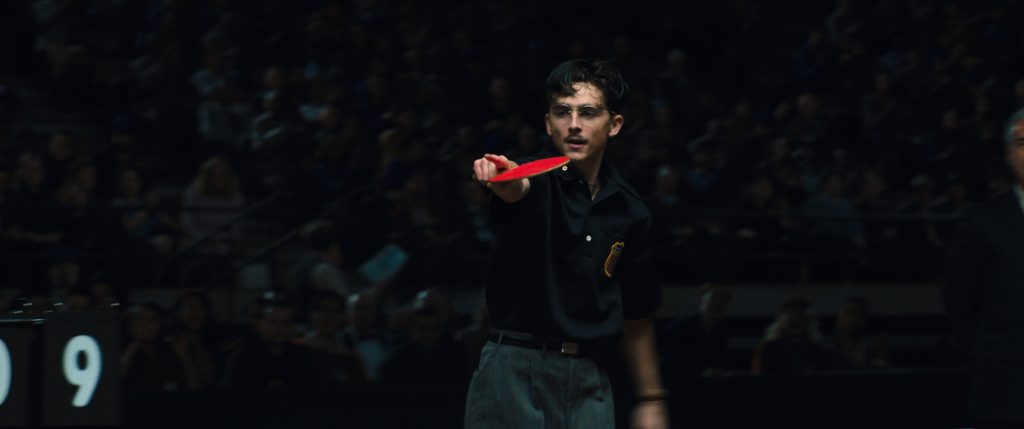
In many ways, sports are inherently sexual. The grunting and laboured breathing mimic the act. Professional sports are intense and unattainable, but these films make them relatable. Tennis, often seen as elitist with its spotless white uniforms and neat grass courts, is given a grittier edge in Challengers. It becomes primal and messy, reflecting the emotions behind the game and inside us all.
Similarly, Marty Supreme plays with our expectations. It takes table tennis from a niche, geeky sport into the alluring world of movie stars and old money. Still, despite the glamour, Marty’s reality is one of desperation. As seen in Uncut Gems, director Josh Safdie is a master at creating tension through chaos, and the way he presents table tennis reflects this. The rhythmic back and forth of the shots is constant but unpredictable. It’s foreplay, and for Marty, it’s an outlet for his stress and passion, much like sex itself.
Films like Challengers and Marty Supreme are a refreshing offshoot in the genre, opening the door to let sports films be less disciplined and more raw. They mirror how we make irrational, messy choices to follow our desire. Winning is the same as wanting, or at least it inspires the same feelings. Sport has always been about control and craving, but now cinema is starting to reflect that.